
 Monday, August 31, 2026, 15:18 In July 2024, ten combat soldiers from IDF Unit 100 were detained at the Sde Teiman military base on suspicion of assaulting a Nukhba terrorist prisoner who took part in the Simhat Torah massacre (October 7). The soldiers, who were guarding the murderous Hamas terrorists, were called to conduct a body search on one of the prisoners. The terrorist, who had served as a terrorist company commander in Jabalia, attacked the soldiers during the search, and then accused them of assault. Some of the soldiers were later arrested and put on trial. Honenu represented some of the soldiers until the dismissal of the indictment and is representing three soldiers in their current lawsuit.
Three IDF Unit 100 soldiers are suing officials in the Military Advocate General’s Corps, the State Attorney’s Office, and others. The soldiers say they were harmed by false suspicions, a highly publicized arrest, the leak of investigative files, and the way that leak was handled. The soldiers are widening an earlier civil case.
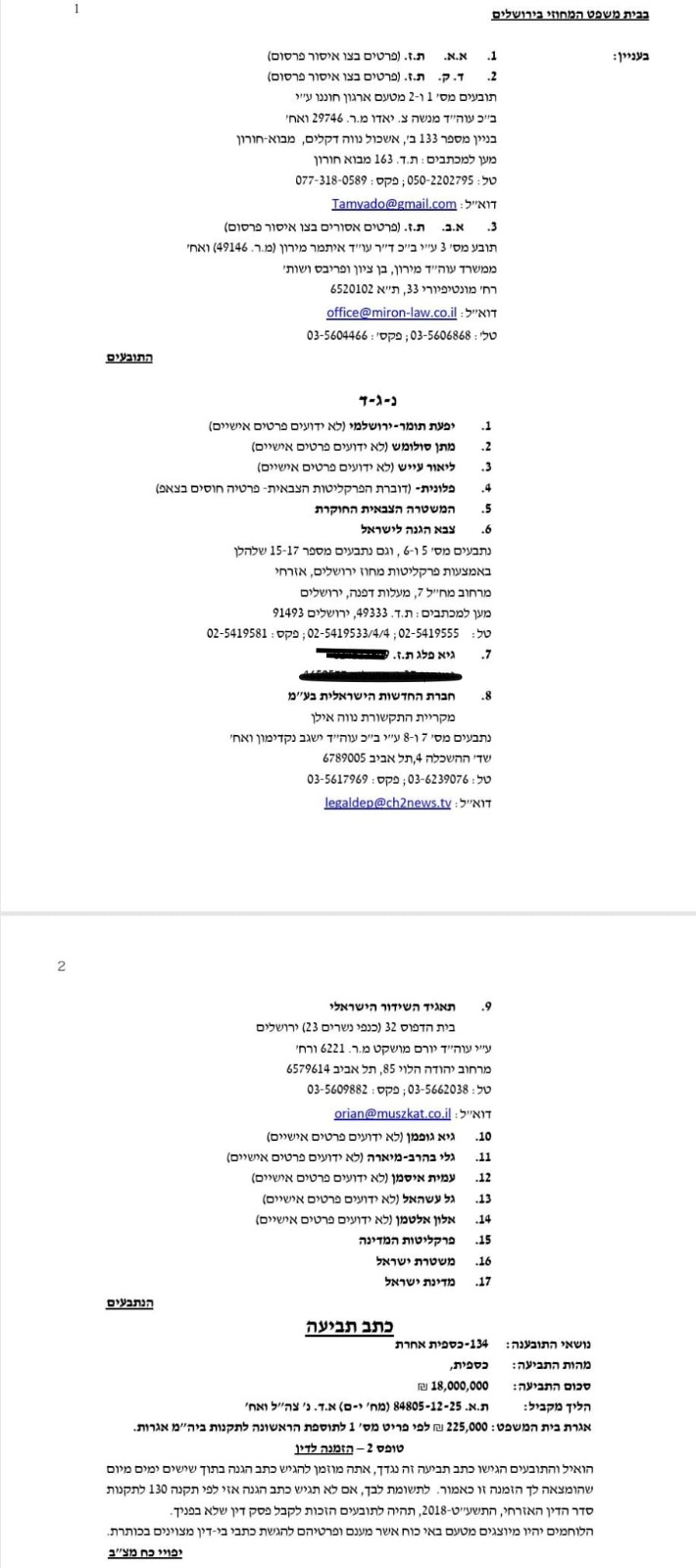
Today (Monday) Honenu Attorney Menashe Yado, together with Attorneys Dr. Itamar Miron and Elhanan Miron of Miron, Bension & Prywes, filed a claim seeking 18 million shekels for alleged false suspicion, false arrest, invasion of privacy, defamation, an unlawful indictment, and a cover-up of the leak investigation. The new claim follows an earlier civil case in the Magistrates’ Court against Channel 12 reporter Guy Peleg and Channel 12 News. Because of the sum involved and the nature of the allegations, the case is now moving to the District Court.
The current defendants include former Military Advocate General Yifat Tomer-Yerushalmi; former Chief Military Prosecutor Colonel Matan Solomesh; Lieutenant Colonel Lior Ayash; the Military Advocate General Corps spokesperson; the Military Police; the IDF; journalist Guy Peleg and the Israeli News Company; Guy Gofman, prosecutor at the Tel Aviv District Attorney’s office; Attorney General Gali Baharav-Miara; State Attorney Amit Isman; Colonel Gal Asael; Deputy State Attorney for Special Duties Alon Altman; the State Attorney’s Office; the Israel Police; and the State of Israel. The total claim is 18 million shekels. Among the sums claimed are 1.5 million shekels for false suspicion of a serious sexual offense, 450,000 shekels for 15 days of false arrest, 3 million shekels for defamation, 1 million shekels for a false indictment, and 500,000 shekels for the cover-up of the leak investigation.
The lawsuit concerns issues beyond the 2024 media reports. The plaintiffs describe a chain of events that began with false suspicions, the publicized arrest, and the leak of investigative material, and continued through the criminal proceedings and the handling of the leak inquiry. The claim makes especially sharp allegations regarding what happened after the leak became known. The plaintiffs argue that the officials who should have investigated it failed for months to open an effective inquiry, and that a later review was structured in a way that could not uncover the full truth. They also allege that misleading presentations were made to the High Court of Justice about the leak and about how widely the leaked materials had been seen.
The claim alleges that senior prosecutors and law-enforcement officials protected those who had leaked information and submitted a misleading position paper to the Supreme Court. The plaintiffs argue that this prolonged their ordeal from August 6, 2024, the date the information was leaked, until March 12, 2026, when the indictment was dismissed. They further allege that State Attorney Isman and others were responsible for the leak inquiry but did not order a criminal investigation for months, and that steps were taken that delayed and blocked a genuine inquiry instead of identifying who gave the files to the media. Even after the leak was exposed, they argue, the system should have re-examined those involved rather than settling for an internal review.
The soldiers also sharply criticize the criminal case itself. They say the Military Advocate General and others held a hearing at the defense’s request but rejected arguments about the leak of investigative materials — a serious conflict of interest, in their view. An indictment followed, which they call flawed from the outset. They point in particular to the decision of the current Military Advocate General, Itai Ofir, to dismiss the indictment after a further hearing. In their view, dropping the charges after a further hearing and after the defense’s arguments were accepted is a strong indication that the original proceedings were defective, and that if the alleged wrongs had not occurred, the period during which they had to face a grave indictment could have been avoided or at least greatly shortened.
Honenu Attorney Menashe Yado said, “This is a complex lawsuit against very powerful actors — the former leadership of the Military Advocate General’s Corps and Channel 12 News, Israel’s strongest news organization — who together inflicted serious harm on the soldiers; and against senior law-enforcement officials who are shielding the former Military Advocate General out of ideological affinity and institutional closeness, while damaging the rule of law and the individual’s equal standing before the law enforcement system.”